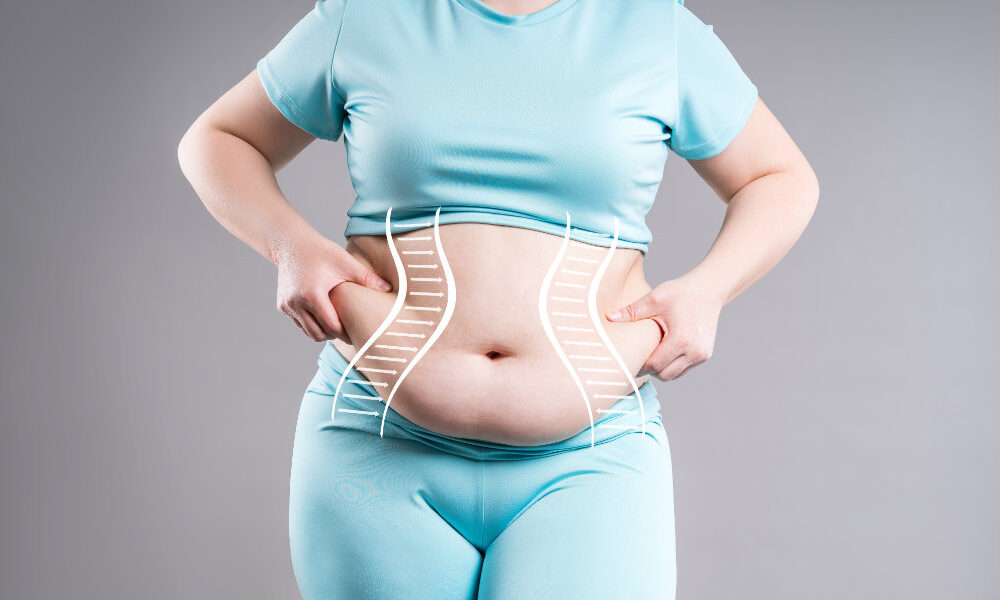
At Robey Plastic Surgery, there are often several different surgical options that treat the same area of the body, but each procedure approaches the concern from a different angle or addresses a different concern.
Liposuction and tummy tuck are both used in the abdominal area, and although each surgery can improve the appearance of the midsection, they are not interchangeable. Liposuction focuses on removing localized fat deposits, while a tummy tuck addresses loose skin and muscle separation in addition to excess fat. We will look at the different types of belly fat, why it develops and how it may be treated with one or both of these surgical options, depending on the patient’s situation.
Different Types of Belly Fat
Visceral Fat vs. Subcutaneous Fat
There are two main types of abdominal fat:
- Subcutaneous Fat: This is the fat that sits directly beneath the skin. It is soft and pinchable and is the type of fat that can be removed with liposuction or other surgical and non-surgical methods. Subcutaneous fat is often more difficult to burn off through exercise or diet, especially when it is in stubborn areas like the belly.
- Visceral Fat: This type of fat surrounds the internal organs deep inside the abdomen. It cannot be removed with surgery and is closely tied to metabolic health. Too much visceral fat increases the risk of certain diseases like type 2 diabetes or heart disease, but it also responds more readily to lifestyle changes.
Fat Distribution and Body Type
Genetics is a strong determining factor for where fat gathers. Some individuals store more fat naturally in their arms or thighs, while others have stubborn fat in the abdomen or hips. Hormone shifts, which can occur during pregnancy or as the body ages, may change how and where this fat is stored. Women often find that after having children, they have more belly fat than they did before their pregnancy, which does not seem to go away even after returning to a pre-pregnancy weight.
Why Exercise and Diet Can’t Always Fix Belly Fat
While it is always important to focus on getting the right nutrients and enough movement each day, losing weight does not always reduce belly fat significantly or resolve a belly bulge. In addition to genetics and hormones, a round or prominent belly can also be caused by muscle separation or skin that has stretched and is unable to contract. Even if a person loses weight overall, it is not possible to concentrate this weight loss on troubling areas like the abdomen. Weight loss takes place evenly across the body, and visceral fat is often the first to go rather than surface fat.
Knowing the Difference Between Belly Fat and Belly Bulges
Subcutaneous fat feels soft and compressible. If there is muscle separation, there may be a protrusion that feels firmer than fat. Muscle separation can also be tested by lying flat on the ground and doing a partial sit-up. If the stomach bulges outward and the gap between muscles is more than two finger-widths apart, there may be muscle separation.
What Is Liposuction?
Liposuction provides surgical fat loss anywhere on the body that has localized subcutaneous fat deposits. It is useful when weight loss efforts are not making a difference. Liposuction is often used to sculpt the abdomen when excess fat is the primary concern and when the patient has good skin elasticity. Once fat cells are removed with liposuction, they are permanently gone, though weight changes can still cause existing fat cells to expand.
How Liposuction Works
This surgery is performed with a thin tube called a cannula that is inserted through small incisions in the skin. The cannula is connected to a device that provides suction and removes the fat deposits from beneath the surface. A fluid is injected into the abdomen before the cannula is inserted to help break up the fat cells and numb the area. Dr. Robey also uses other types of technology, like radiofrequency-assisted liposuction and power-assisted liposuction, to reduce recovery time or provide improved skin tightening.
Who Liposuction Is Best For
Ideal candidates for liposuction include:
- Individuals at or near a healthy weight
- Patients with firm skin that can retract after fat removal
- Those with isolated pockets of abdominal fat
- Patients without significant muscle separation
What Liposuction Doesn’t Do
Liposuction is not a substitute for losing weight. Instead, this surgery is often performed once a patient has reached their goal weight. Liposuction also does not significantly tighten loose skin, remove visceral fat or repair separated abdominal muscles. The primary purpose behind liposuction is fat removal, and the maximum amount of fat that can be removed is typically around ten pounds.
What Is a Tummy Tuck?
This surgery, also called abdominoplasty, is a more extensive surgery than liposuction that reshapes the abdomen by removing excess skin and tightening the abdominal wall. A tummy tuck can also be used to rejuvenate and reposition the belly button and can reduce some stretch marks, if present on the lower abdomen. While subcutaneous fat is removed during the process, there is a strong emphasis on abdominal repair.
How a Tummy Tuck Works
Tummy tuck surgery starts with an incision along the lower abdomen that goes from hip to hip, with a circular incision around the belly button. The tissue is lifted to allow for the muscles to be sutured together, correcting diastasis recti. The tissue is replaced, and redundant tissue is excised. A new opening is made for the belly button, and the skin is repositioned and sutured into a smooth and flat position.
Who a Tummy Tuck Is Best For
Tummy tucks are considered for healthy patients who can tolerate a long downtime and more extensive healing. Patients who may be considered include:
- Those with loose or hanging abdominal skin that cannot retract
- Individuals with muscle separation that cannot be resolved through exercise
- Those who have lost weight and are at their goal weight
What a Tummy Tuck Doesn’t Do
This surgery is also not a replacement for weight loss and does not remove visceral fat. It also does not prevent future weight gain. Tummy tucks can provide long-lasting results, but skin and muscles can stretch again with weight gain or pregnancy.
Comparing Liposuction and Tummy Tuck
Invasiveness and Downtime
Liposuction is less invasive than a tummy tuck because the incisions are much smaller and it is much less involved. Patients can expect to return to most light activities within several days. With a tummy tuck, the larger incision and internal muscle tightening take time to heal, with more activity restrictions for the first four to six weeks.
Scarring
Scars with liposuction are well hidden and barely noticeable. A tummy tuck scar is larger, but placed low, where underwear and swimwear can hide it. Surgical scars will always be present after a major procedure, but the color will fade, and the texture will soften with the proper wound and scar care.
Anesthesia
Patients receiving liposuction may have their surgery performed under local anesthesia with sedation, or under general anesthesia. A tummy tuck is performed under general anesthesia.
When Combining Both Procedures Makes Sense
During a tummy tuck surgery, liposuction is also often used to refine the surrounding areas. Fat can be removed from the flanks, hips, upper abdomen, thighs, and much more, so that once the excess skin is removed and muscles are tightened, the entire area can look more shapely. Combining procedures reduces the need for multiple surgeries and recoveries, and it also provides more comprehensive results for the right patient.
Liposuction and Tummy Tuck Pros and Cons
Liposuction
Pros
- Smaller incisions
- Shorter recovery time
- Effective for isolated fat pockets
Cons
- Does not tighten loose skin
- Does not repair muscle separation
- Limited benefit if skin elasticity is poor
Tummy Tuck
Pros
- Removes excess skin
- Repairs abdominal muscle separation
- Creates a flatter and firmer abdominal contour
Cons
- Longer incision and visible scar
- Longer recovery period
- More extensive surgery overall
What to Expect From Your Consultation
The process begins with a detailed evaluation at Robey Plastic Surgery in Carmel, IN. During this visit, Dr. Robey examines skin elasticity, fat distribution and abdominal muscle integrity. Medical history, prior surgeries and future plans such as pregnancy are also reviewed. This is when Dr. Robey will determine which of the two surgeries is best, or whether both would be beneficial.
Who Is a Good Candidate for These Procedures?
Good candidates are patients in overall good health with realistic expectations. A stable weight is important, as significant weight changes after surgery can affect contour. Non-smokers or those willing to stop smoking before and after surgery typically heal more predictably. Ideal candidates are those looking for local fat loss rather than major weight changes.
Choosing Your Surgeon for Liposuction and Tummy Tuck Surgery
Selecting a surgeon for liposuction or a tummy tuck should be done with a careful review of credentials, training and experience. Dr. Ashley Robey is a quadruple board-certified plastic surgeon in Carmel, IN, with certifications in Plastic Surgery, Facial Plastic and Reconstructive Surgery, Otolaryngology and Anti-Aging Medicine.
Dr. Robey completed her undergraduate studies in Chemical Engineering at Purdue University and earned her medical degree from Indiana University School of Medicine. Surgical residencies in multiple states gave her even more skin and precision. She has received awards like the RealSelf Top Doctor award and the Compassionate Doctor Award because of her commitment to her community and patients.
Find Out More About Belly Fat Options With Services in Carmel, IN
Abdominal contour concerns vary, and the right solution depends on whether excess fat, loose skin or muscle separation are the main concerns. A consultation is the best way to determine which approach can create a flatter and more balanced abdominal profile. To learn more about treatment options at Robey Plastic Surgery in Carmel, IN, call 317-721-7110 or complete the online form to schedule a consultation.